Don’t Call It a Comeback: Detroit’s History in Photos
Modern Detroit is a lot of things, all at once: infamous city of decay, hotbed of creativity, time capsule of the American dream, etc. Regardless of how you look at it, Detroit’s been through a lot, and has some battle wounds to show for its fights.
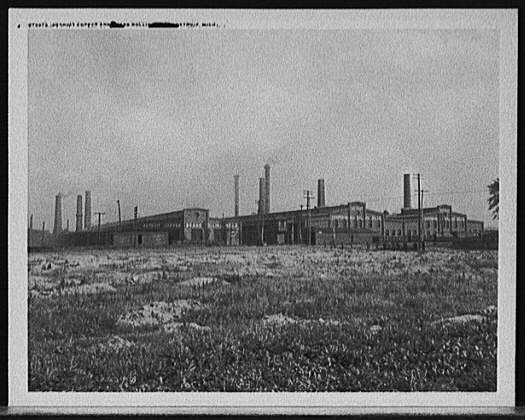
Detroit’s copper and brass rolling mills. Photo from 1910-1920.
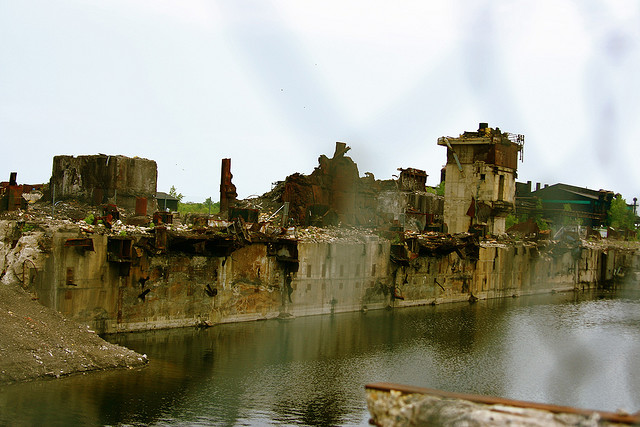
The ruins of a similar first-wave industrial complex. (source)
At the beginning of the Twentieth Century, the automobile hadn’t been invented. Yet there sat Detroit, perfectly situated as a trading point of goods from the first wave of the Industrial Revolution. The rest of the story is familiar; mid-century found Detroit in full swing as Motor City USA, a modern metropolis, a shining light for the future of the midwest. In 1950 Detroit was the city of tomorrow.
.jpg)
Detroit’s nighttime skyline as viewed from Windsor. 1900-1915.
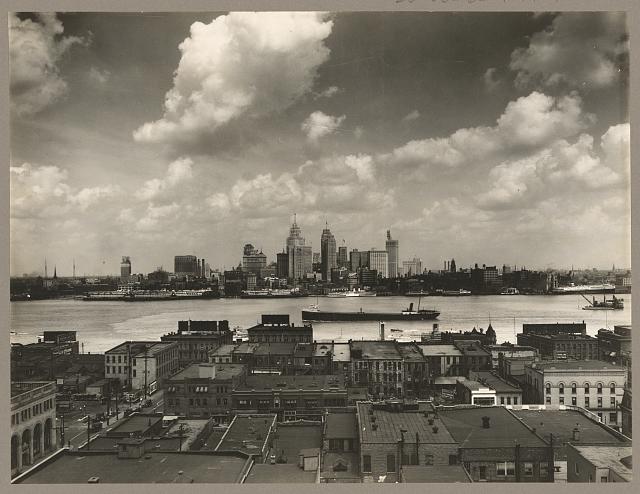
The Detroit skyline and boats on the Detroit River as seen from Windsor, during the heyday of rum-running. Circa 1929.
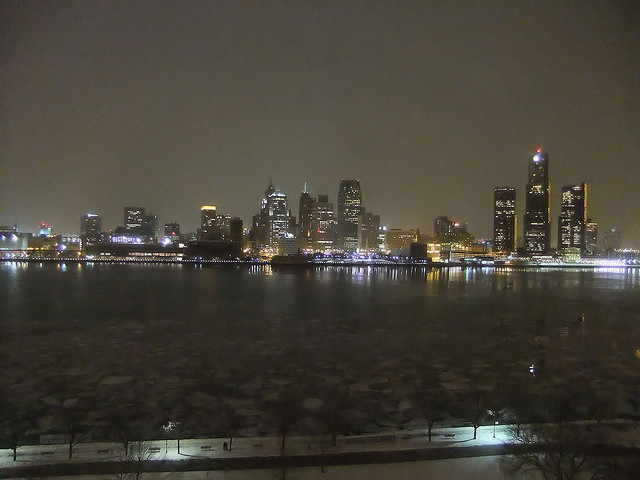
Present-day Detroit from the same vantage point. (source)
But slowly, the world caught up and Detroit’s city of tomorrow became more and more a relic of the past. A victim of globalization, corporate greed, and the collapse of the industrial belt, Detroit was in rough shape by the 1970s. By 2000 over a million people had moved elsewhere, leaving the city up to 60% vacant by some estimates.
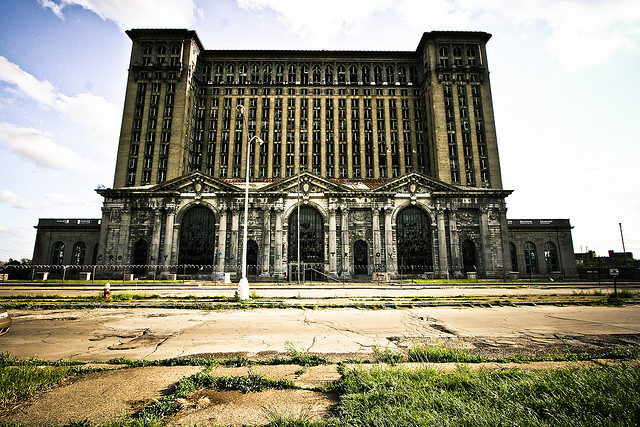 The specter of Michigan Central Station has become emblematic of the dichotomy between Detroit’s past and present state. (source)
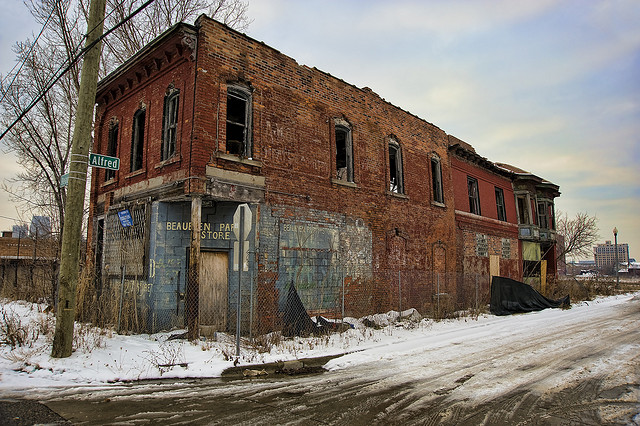
The remnants of a beauty parlor. (source)
So what happened?
Here’s where that ‘careful what you wish for’ piece comes in.
Escapism via car had been the goal of much the work being done in Detroit: earn enough to not have to be there anymore, then move to the land of suburban dreams-come-true as soon as the option presents itself. So present was this dream that much of the art, culture and history of Detroit was paved over with auto money in a race to escape the city of tomorrow.
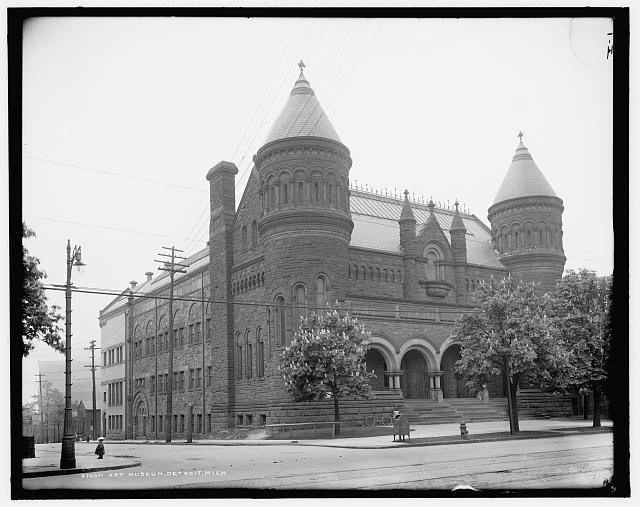 Detroit Museum of Art circa 1900.
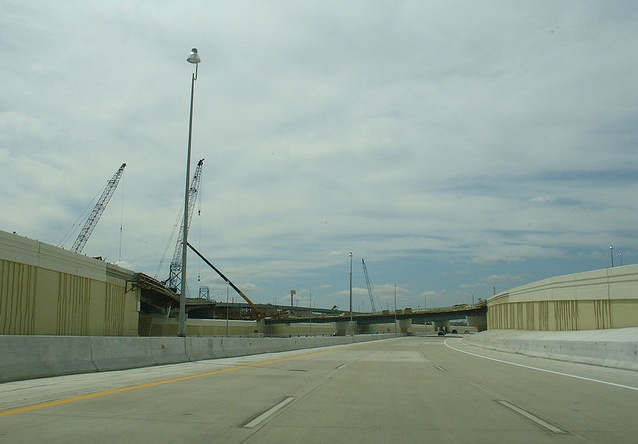 The Detroit Museum of Art was demolished in 1960 for the Hastings Expressway
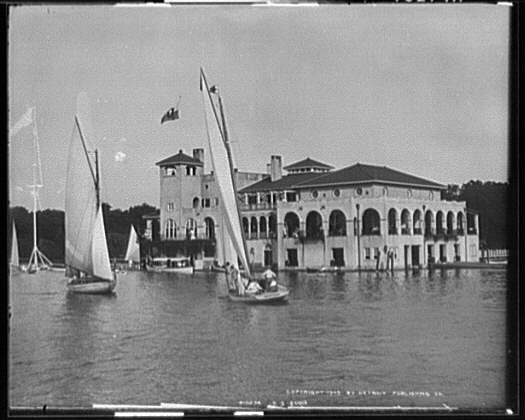 The Detroit Boat Club, located on Belle Isle, was the first poured concrete building ever erected. Pictured here in 1905.
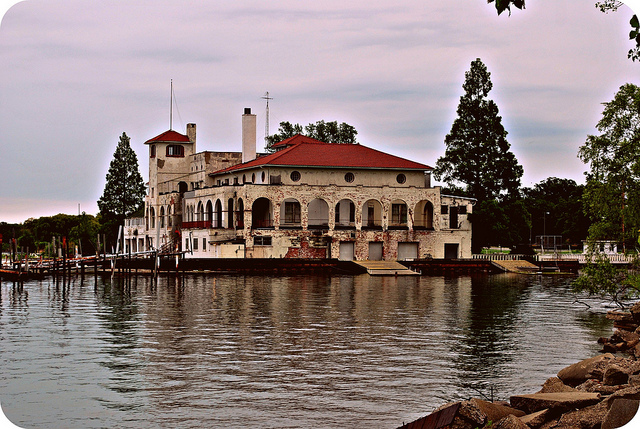 The Detroit Boat Club as it appears today. (source)
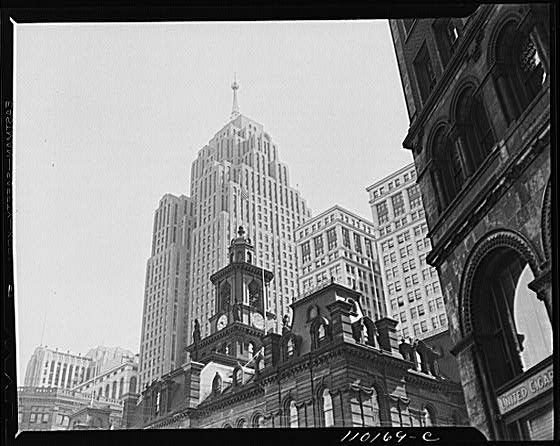 In July 1942, the top of Detroit’s city hall was dwarfed by the more modern Penobscot Building in the background.
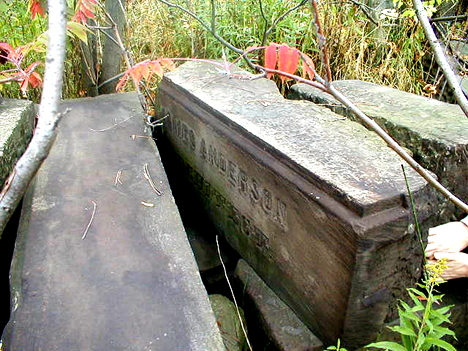 The derelict cornerstones of the same city hall lie cast aside. (source)
It is here is where we pick up the modern narrative of Detroit, the “Roger and Me” story of a city abandoned by its industry, and collapsing into a pile of rubble…but look again.
Like all stories told about a place by outsiders, those on the inside see things quite differently. It’s just not that clear-cut. While Detroit architecture and culture has indeed suffered, much remains, and there are many who work fiercely to protect it. Additionally, signs of new life in Detroit continue to spring up right along side the reminders of the city’s blighted past, such as in the case of the new and old Cass Tech High Schools.
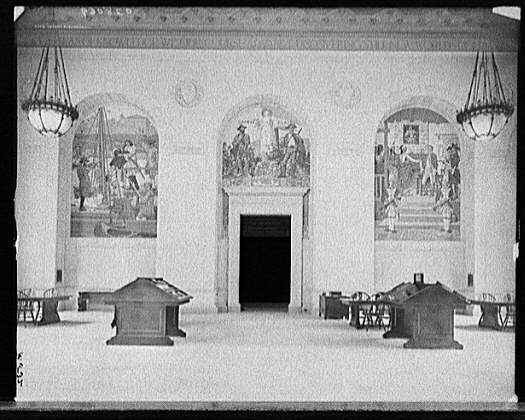 Taken between 1900 and 1920, this photo shows the reading room in the Detroit Public Library. Pictured are three murals comprising the “Spirit of the Northwest,” by artist Gari Melchers.
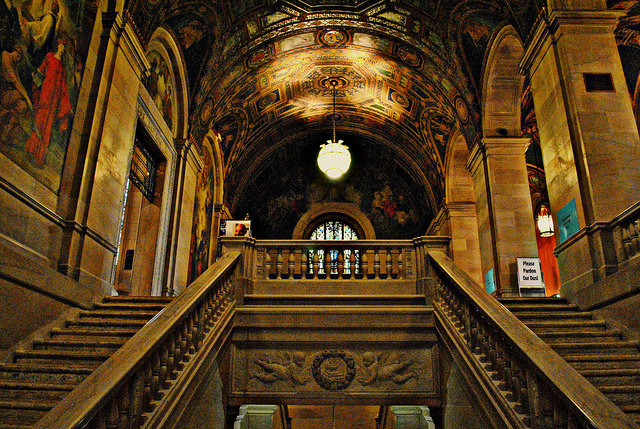 The Main Building of the Detroit Public Library as it appears today. It remains lovingly cared-for, murals included. (source)
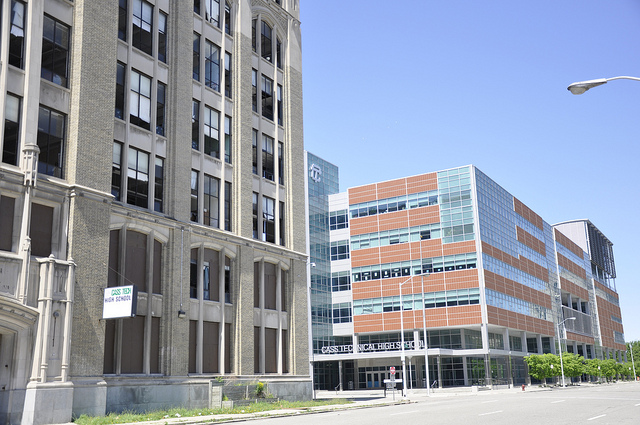 In the foreground, the desintegrating old Cass Tech High School that is often featured in media reports on Detroit, eclipsing the snazzy new Cass Tech located immediately next door. (source)
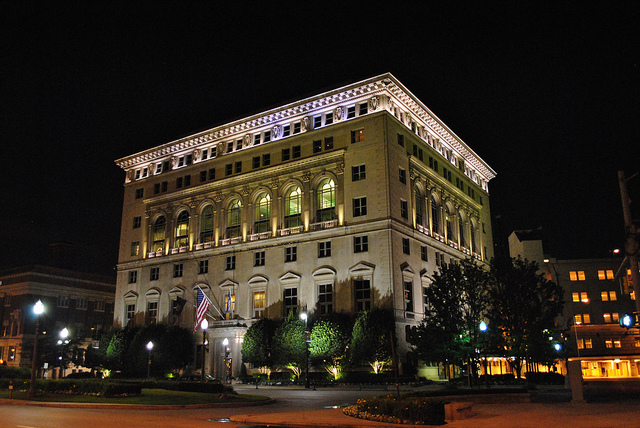 Opened to the “public” in 1915, the Detroit Athletic Club remains among the most elegant private clubs in the United States, thanks to constant maintenance and care from its members. (source)
History is cyclical, and its affect on Detroit will be no exception. The city was splendid before the advent of the automobile, and later set an example for the nation (if not the world) on how to stoke an economic and social boom. Now Detroit and its citizens are boldly setting the standard for reinvention, showing how a city can be changed not just for the “better” but for the different, considering the previous ideal didn’t pan out so well.
In the words of the inimitable LL Cool J: Don’t call it a comeback. [Detroit’s] been here for years.
Unless otherwise noted, all images in this post are used courtesy of the Library of Congress’ Digital Collection.
---- ---- ---- ---- ---- ---- ---- ---- ---- ----
Resources for further investigation:
Atlas Obscura is proud to present this post as part of a partnership with the excellent Palladium Boots, who encourage you to explore your street, city, and the world.






Follow us on Twitter to get the latest on the world's hidden wonders.
Like us on Facebook to get the latest on the world's hidden wonders.
Follow us on Twitter Like us on Facebook