Where Eagles Dare: The Jetpack Murder
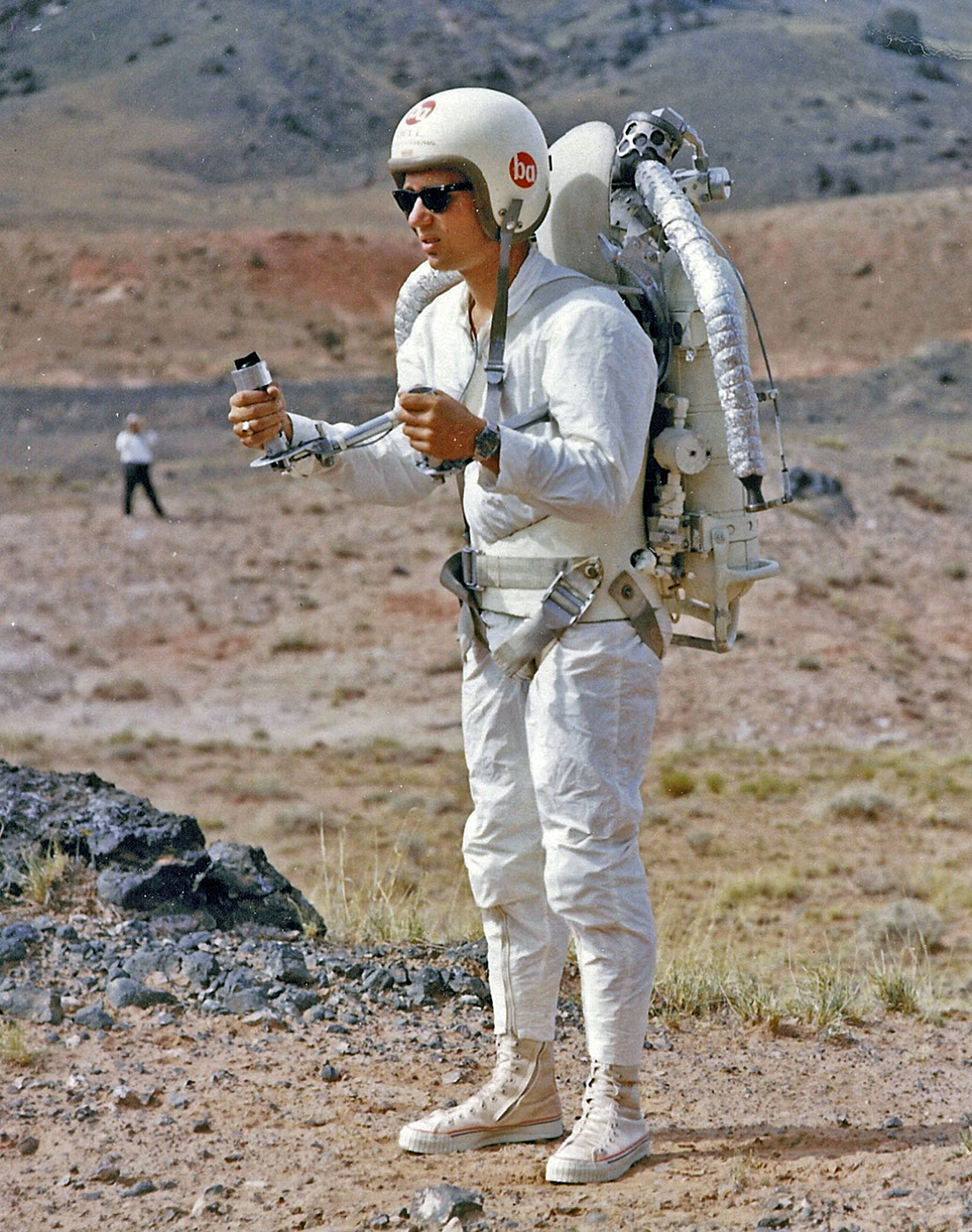
Test pilot Bill Suitor was getting ready to fly. Wiping the sweat off his brow, Suitor pulled the 120 pound Rocket Belt 2000 onto his back, and held the trigger. With 300 pounds of thrust, Bill Suitor shot straight up into the air, tilted forward slightly and flew forward. For 28 seconds over Texas’ Houston Ship Channel, Suitor flew powered by the “jetpack” strapped to his back. This 1995 flight was the Rocket Belt 2000’s first glorious flight. It was also its last.
Of the three men who worked to make this rocket belt test flight happen, one would end up dead, one went to prison for kidnapping one of the others, and the third man, well…he’s the only one who knows where the Rocket Belt is.
Considering more men have walked on the moon (12) then free-flown a jetpack (11), the contraption has gained a remarkably weighty place in our cultural consciousness. Thought up in the 1920’s as a cover gimmick for a pulp magazine, experimented with by the Nazis in the 1940’s, and featured in B-Movies in the 1950’s, it was finally brought to fruition and tested by NASA in the 1960’s as part of Project Apollo. The Rocket Belt - later to be more commonly referred to as a “Jet Pack” - was always that imaginative technology that was “just around the corner.” For a time, as with flying cars, jet-packs, like the “Jetsons” who used them, simply felt like the future.

As time went on and the jetpack failed to materialize in everyday life, it became a symbol of a charmingly retro future. However, in the early 1990’s an insurance salesman and rocket belt enthusiast named Brad Barker became determined to bring the rocket belt back to the future.
Started in 1992, the American Rocket Belt Corporation was set up by Brad Barker, Larry Stanely, and Joe Wright to kick off this new rocket belt renaissance. Barker was the visionary, Stanley the funder, and Wright provided free space and equipment. More than just a quest for flight, they wanted to be rich. In Barker’s words “That was pretty much it: build the belt, go out and make a lot of money.”
But despite the pragmatic ends, by 1994 the three had successfully done what many others before them had failed to do; they had created a working Rocket Belt prototype, the RB-2000. Besides being lighter and stronger than the 1960s NASA model, it allowed for 30 seconds of flight, up from the original’s scant 20 seconds.* But the technical aspects of the Rocket Belt turned out to be the least of the American Rocket Belt Corporation’s problems. There were… other complications.
Long before the RB-2000 was flying over the Houston Ship Channel, the company was already in ruins. Barker and Stanley were at each others throats, while the third partner Joe Wright had a failing car stereo business and a escalating crystal meth addiction. Even before the inaugural flight of the belt, Barker and Stanley had had a terrible falling out. Stanley believed Barker was stealing money from the company and when he confronted Barker, they fought violently. From a 2002 Sunday Herald article:
“Stanley got in my face,” Barker recalls. “I grabbed a five-pound, dead-blow, lead-filled hammer off the table. I hit Stanley short blows twice to the back of the head. That pretty much ended the partnership.”
Barker grabbed the RB-2000 and took off. It would be some time before Stanley saw the RB-2000 again.
It was while watching a Houston basketball game on TV, that Stanley saw something that he immediately recognized: the RB-2000 strapped to the the back of pilot Bill Suitor. There, watching on his television set, that Stanely watched his co-creation take that inaugural flight over that Houston Ship Channel. He immediately got in touch with Wright in hopes of tracking down the RB-2000 and Brad Barker. But Brad was on the move. Only hours after Suitor landed the RB 2000 across the Houston Ship Channel, having demonstrated the best rocket pack built in 30 years in front of a cheering crowd of Houston Rockets fans, Brad Barker loaded the RB-2000, or as he named it, the “Pretty Bird,” into his truck and took off again.
Stanley was furious. Having sunk hundreds of thousands of dollars into the Rocket Belt he wanted to make his money back, and to do that he needed the RB-2000 back. Despite their own infighting, Stanely turned to Wright to launch a joint lawsuit against Barker. Trouble was that by the time the lawsuit rolled around in 1999, there was only one of them was left to testify.
Eleven days before the trial started, someone went to Wright’s house, knocked on the door and when he opened it, pummeled him to death with a blunt object. He was beaten so thoroughly that he was said to be “unrecognizable as a man or woman from the waist up.” Barker was the main suspect. Though the police arrested and questioned Barker about Wright’s murder, they didn’t have enough evidence to hold him, and after three days he was released, only to disappear with the RB-2000. At the civil trial over the RB-2000, in which Wright was planned to testify, Barker was nowhere to be seen. The judge found in Stanley’s favor. From a 1999 AP article about the lawsuit:
“Fed up with years of stalling, a judge Tuesday granted an aviation enthusiast the rights to a one-man rocket belt, awarded him more than $10 million in damages and ordered the belt returned to him. “I’m relieved this is over with.” Stanley said after the ruling.
Except it wasn’t over. Not quite.
One year later, with Barker refusing to pay and not offering up any information about the whereabouts of the RB-2000, Stanley decided to take matters into his own hands. Luring Barker out of hiding with the false promise of a Hollywood film job, Stanley arranged for four men to kidnap Barker. Holding him for eight days in a small box disguised as a SCUBA-tank container, Stanley threatened and harassed Barker in an attempt to find the location of the RB-2000. As he drilled holes in the box with Barker inside of it, he was heard to say “The more holes, the faster it’ll sink.” In the last days of the kidnapping Stanley held a gun to Barker’s head and forced him to sign papers handing over the rights to the RB-2000. **
After eight days of this, Barker was eventually able to slip his cuffs and escape. When he was picked up by the FBI, whom he had his brother contact, he was 23 pounds lighter and had cuts on his wrists that went nearly all they way to the bone. Stanley and his accomplice were sentenced to life in prison (later reduced to eight years).
As of 2011 Joe Wright’s murder has never been solved, and the RB-2000 has never been found.
When asked about the whereabouts of the Rocket Belt in 2002, and if it would ever be seen again, Barker simply said ”You just never know.”
------------------------------------------------------------------------------------------------
*It should be noted that Barker was only able to finish the prototype by enlisting the help of both Bill Suitor - one of the 1960s rocket belt test pilots, pilot of the jetpack in the James Bond movie Thunderball, and pilot of the RB-2000s only flight - and that of inventor Doug Malewicki, famed for creating the Robosaurous, a 40 foot tall car crushing, fire breathing, dinosaur that puts in regular appearances at Monster Truck rallies.
**Joe Wright’s sister now believes it was Stanley who murdered Joe, perhaps in an attempt to frame Brad.
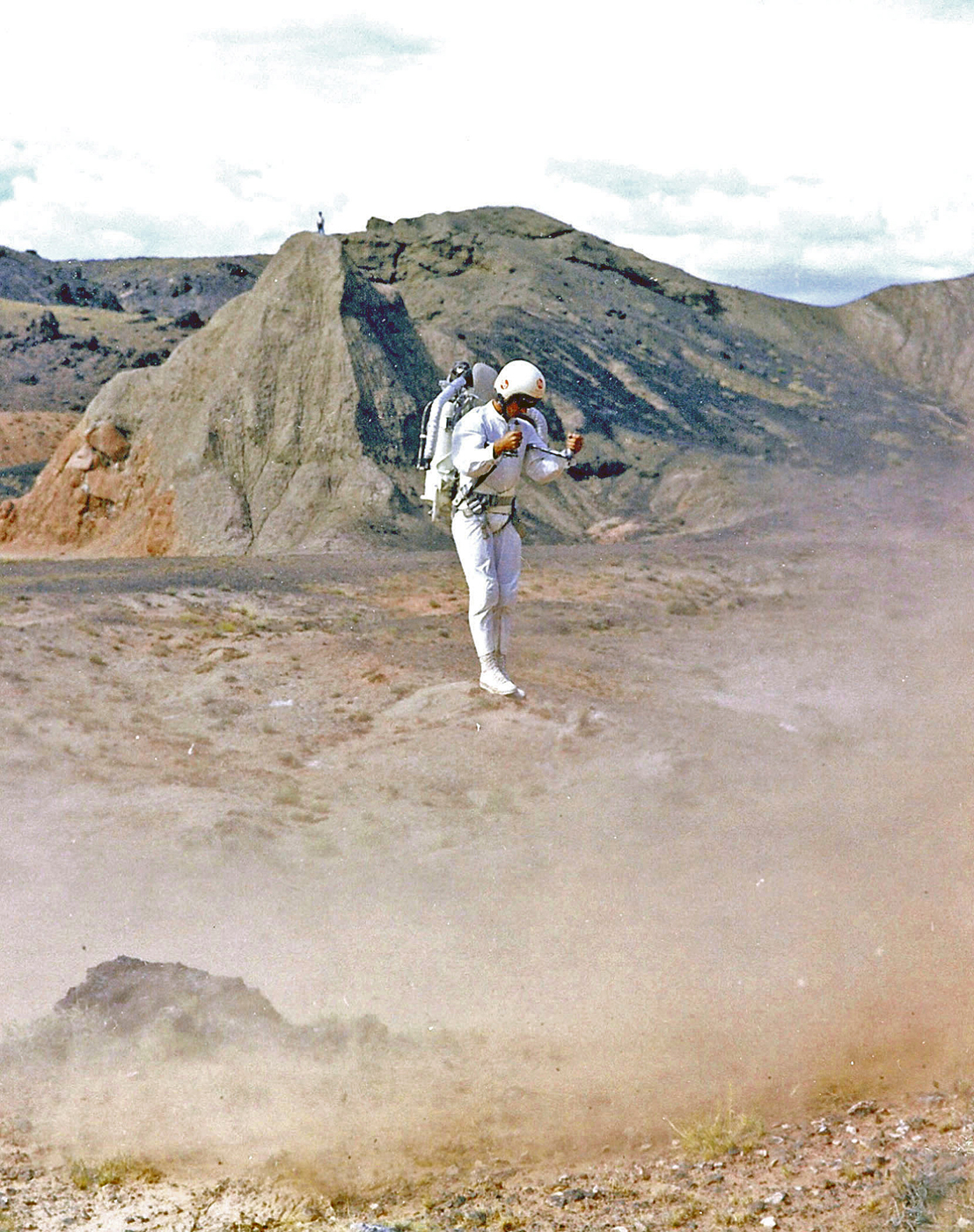
Today you can see Rocket Belts and Jetpack’s in a handful of places around the country.
Rocket Belt #1 - the first built by Bellin the 1960s - can be seen at the Ira G. Ross Aerospace Museum formerly known as the Niagara Aerospace Museum.
Rocket Belt #2 can be seen at the Smithsonian Institute’s National Air and Space Museum in Washington, DC.
Rocket Belt #3 was destroyed, but #4 can be seen at the State University of New York at Buffalo’s Department of Industrial and Systems Engineering.
A later model, the “Bell Jet Flying Belt” (with a much longer flying time, up to 30 minutes) can be seen at the Williams International Company museum in Walled Lake, Michigan, United States.
Newer models, built in the 2000s can be seen at the Tecnologia Aeroespacial Mexicana at Nva. Polonia 189, Lomas de Cortes, Cuernavaca, Mor. 62240 Mexico
View Jetpacks on Public Display in a larger map
Sources: Slate, Air Space Mag, rocketbelts.com, Rocket Belt wiki, Jet Pack Wiki, disaircraft, internetage.com, Google books, Amarillo.com, LA times, findarticles, chron.com, tecearomex.com and the book The Rocketbelt Caper: A True Tale of Invention, Obsession and Murder by Paul Brown and Jetpack Dreams by Mac Montandon






Follow us on Twitter to get the latest on the world's hidden wonders.
Like us on Facebook to get the latest on the world's hidden wonders.
Follow us on Twitter Like us on Facebook