

About
Despite many attempts, and many claims, of having built a perpetual motion machine, (see Steorn's recent Orbo device) no one has, for one very simple reason. They are impossible.
Not impossible however, is a device which uses available energy, solar or water for example, to do its work for it. Not so much a perpetual motion device, as just a very efficient (or should you be feeling judgmental, lazy) machine.
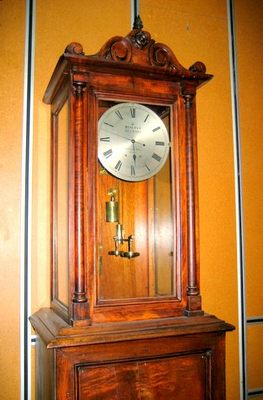
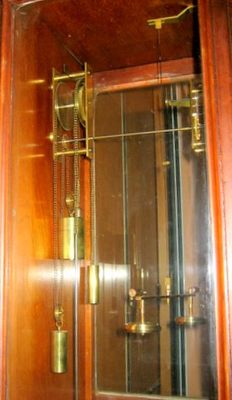
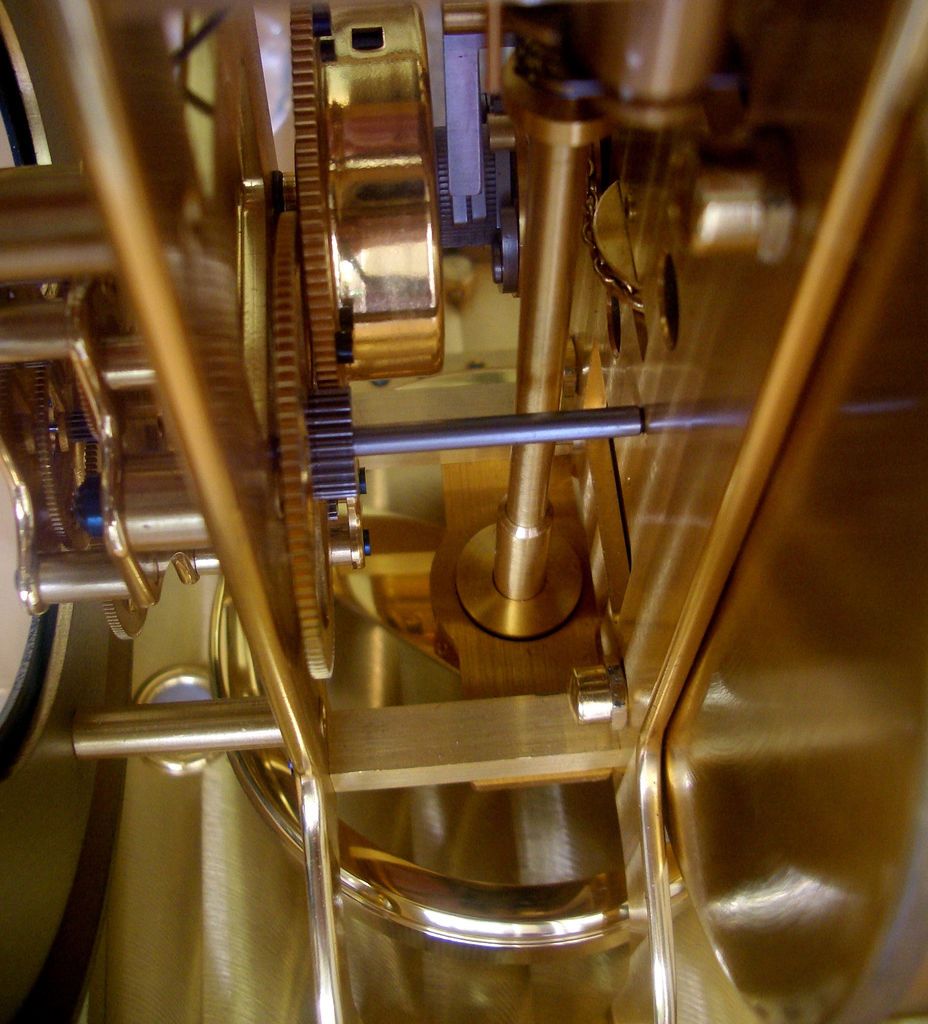
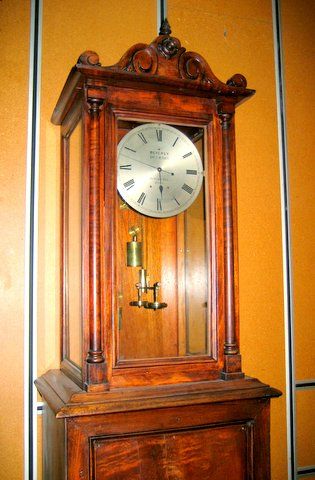
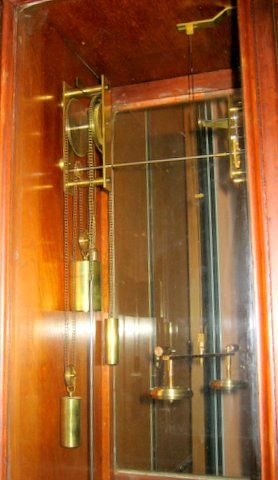
Such is the Beverly Clock, a clock invented in 1864 by Arthur Beverly and located in the foyer of the Department of Physics at the University of Otago in Dunedin, New Zealand. Run on atmospheric pressure and changes in the temperature, an airtight box inside the clock expands and contracts throughout the day pushing on a diaphragm. It takes only a six-degree Celsius temperature variation over a day to raise a one-pound weight an inch. This in turn descends, powering the clock.
Despite having never been wound, the clock has indeed stopped running a number of times due to mechanical failure, for cleaning, and on a few occasions when the temperature and atmospheric pressure has remained steady for very long periods of time.
Despite this, because the mechanism continues to function, the Beverly clock is considered one of the world's longest running experiments, and is the closest anyone will ever see to a "perpetual motion machine."
 This location took part in Obscura Day 2010!
Related Tags
Know Before You Go
You can't access the clock without a key card to get on the lift.
Wild New Zealand: Exploring the North & South Islands
Stunning landscapes, unique wildlife, and rich Māori culture.
Book NowCommunity Contributors
Published
February 15, 2010