Einsteinturm
Solar observatory doubles as a daring display of Expressionist architecture, much to Einstein's chagrin.
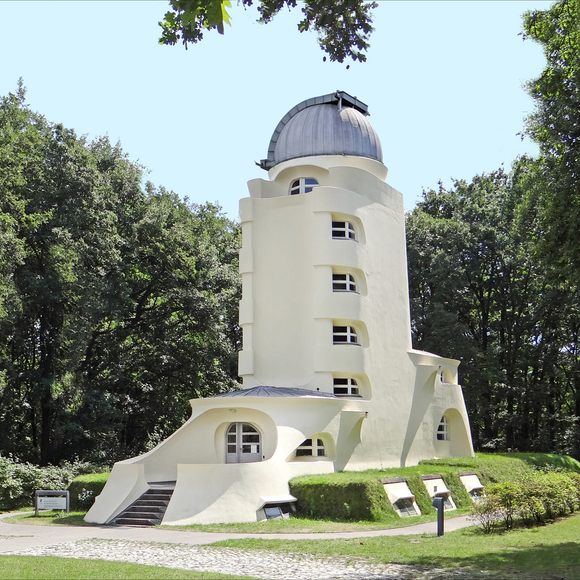
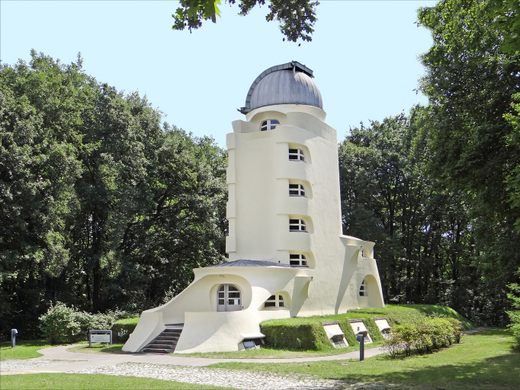
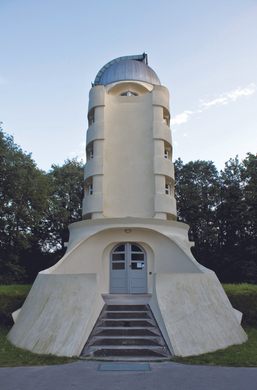
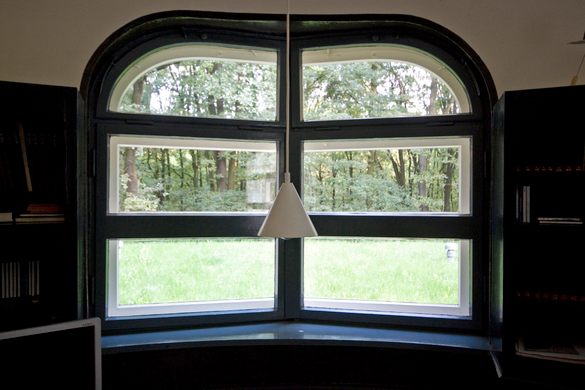
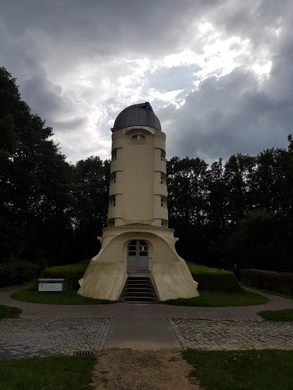
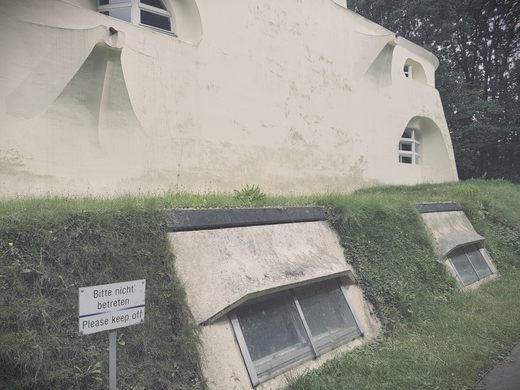
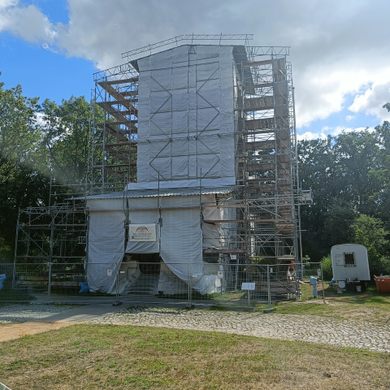

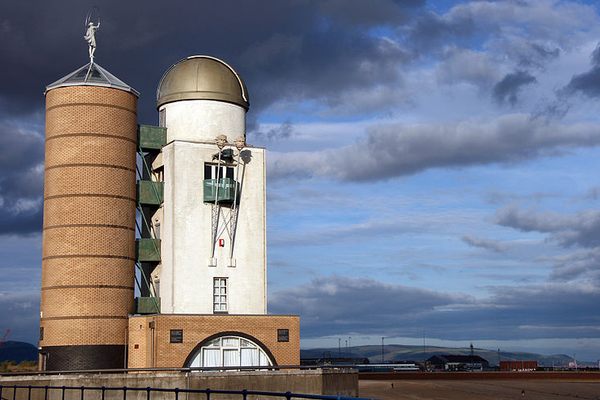
Einsteinturm, or the Einstein Tower, is an astrophysical observatory in the Albert Einstein Science Park of Potsdam, Germany. Built from 1920 to 1921, the observatory’s intended purpose was to provide supporting or refuting evidence of Einstein’s General Theory of Relativity, published a decade earlier.
One of the consequences of Einstein’s theory stated that light originating from a massive body, such as the sun, is shifted in frequency and wavelength. It was this “gravitational redshift” that Potsdam scientists sought to observe. The researchers soon found, however, that atmospheric turbulence on the solar surface interfered with their measurements. Thus, it was not until the 1950s, when these disturbances could be accounted for, that the gravitational redshift was confirmed.
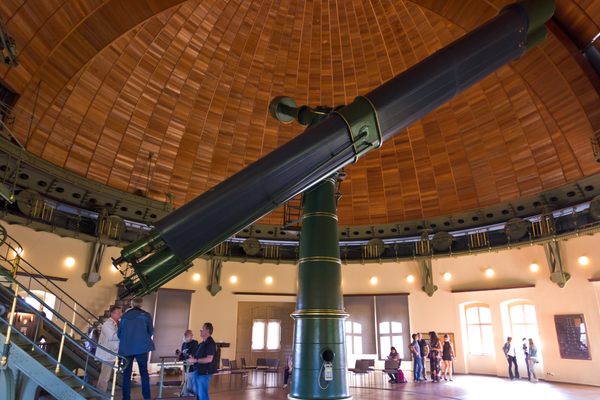
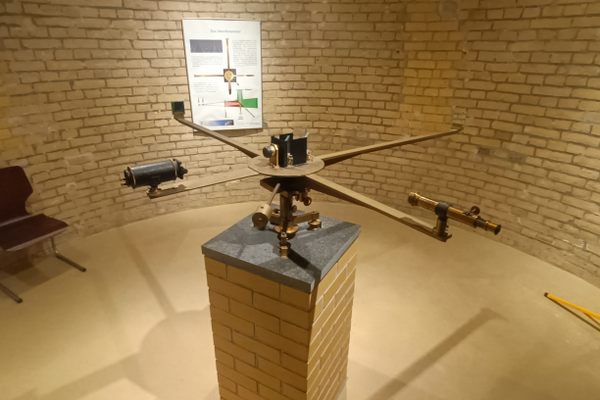
The observatory’s primary feature is a coelostat, a solar telescope that tracks the sun through the sky using movable mirrors. This instrument directs a fixed-orientation image of the sun down through the tower to the basement where the light then enters various instruments for measurement.
Conceived by Erich Mendelsohn in 1917, the observatory is considered the most famous example of Expressionist architecture. The building’s fluid and dynamic form was regarded as progressive at the time, much like Einstein’s theory that led to its construction. Discussing his inspiration, Mendelsohn said the design arose from “the mystique around Einstein’s universe.”
Einstein, however, was apparently unimpressed with the design. After receiving a tour from Mendelsohn, the physicist reportedly whispered his terse judgment into the architect’s ear: organic. Mendelsohn never built in the Expressionist style again, though that is likely due to difficulties he encountered with the use of poured concrete rather than Einstein’s verdict.
In addition to the scientific instruments, the tower houses a bronze bust of Einstein that almost perished under the Nazi regime. During the infamous dictatorship, the observatory lost its independent status and all depictions of and references to Einstein (including the tower’s name) were eliminated. The bust, however, survived thanks to preservation-minded staff members, who hid it behind laboratory crates.
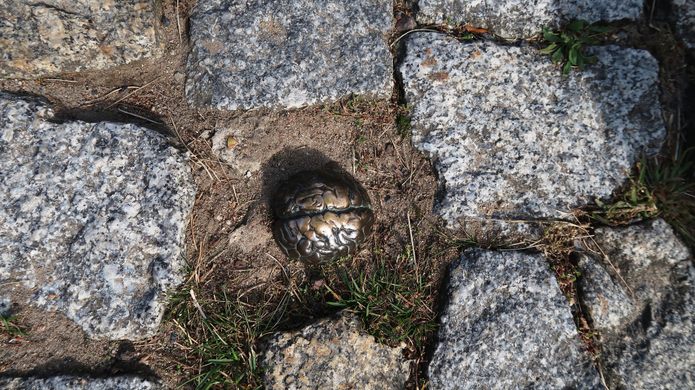
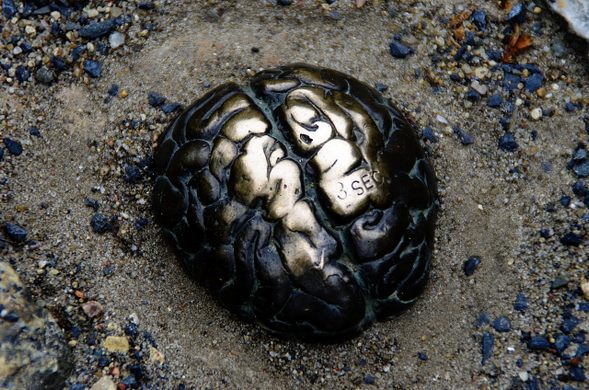
Einsteinturm is also the home to another notable sculpture, titled “3 SEC Bronze Brain - Admonition to the Now - Monument to the Continuous Present.” Created by Berlin artist Volker März, the fist-sized brain is a reference to the work of Ernst Pöppel, the German neuroscientist. Pöppel asserts the experience of temporal continuity is based on an illusion, which rests upon the reconstruction of discrete three-second intervals of consciousness.
Today, the observatory is operated by the Astrophysical Institute Potsdam and solar research continues. The characteristics and behavior of the sun’s magnetic field is the primary research focus.
Update as of September 2022: The tower is currently being renovated and is not accessible.
Community Contributors



Plan Your Trip
The Atlas Obscura Podcast is Back!



Follow us on Twitter to get the latest on the world's hidden wonders.
Like us on Facebook to get the latest on the world's hidden wonders.
Follow us on Twitter Like us on Facebook