

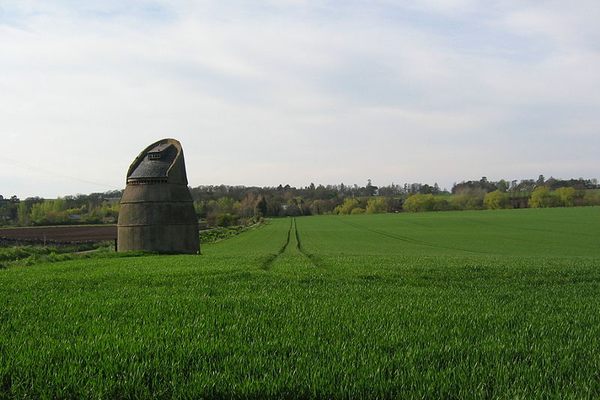
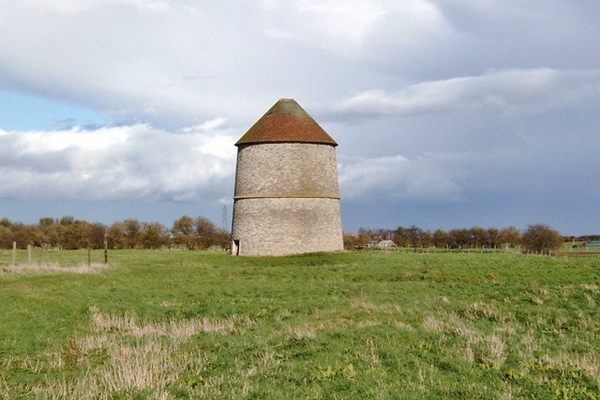
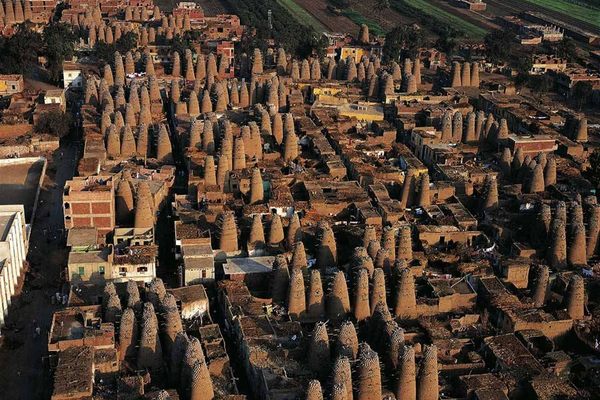
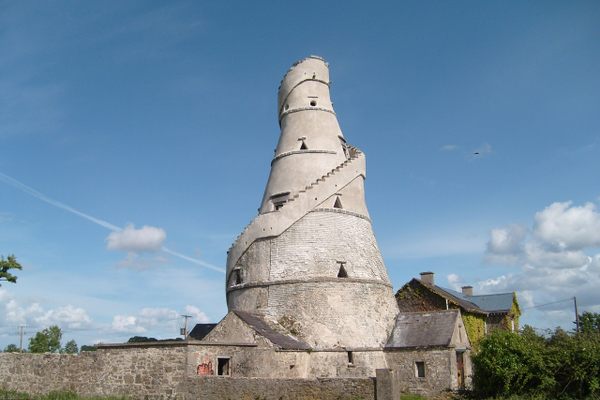
For most city dwellers, pigeons are categorized along with rats, cockroaches and mice as vermin. Not so in 16th and 17th century Iran. Domesticated, pigeons were a valuable resource, or rather, their poop was. Rich in nitrogen, pigeon guano was used across Iran as a natural fertilizer for melon and cucumber fields.
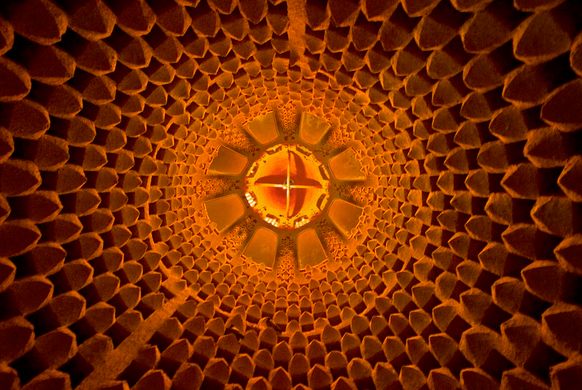
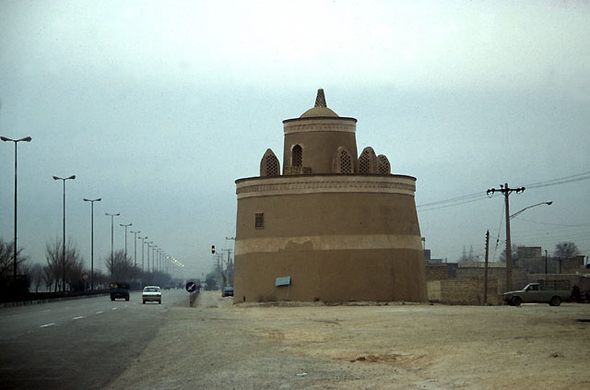
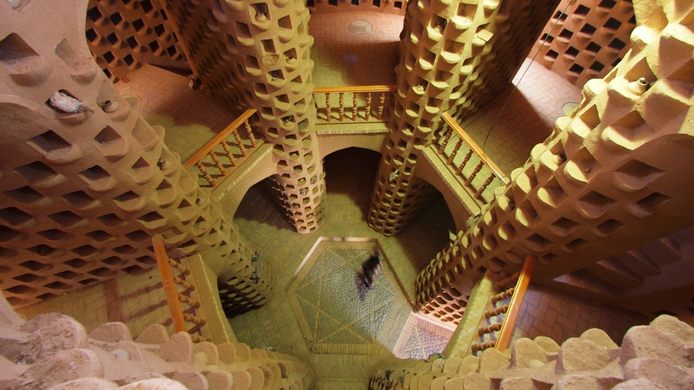
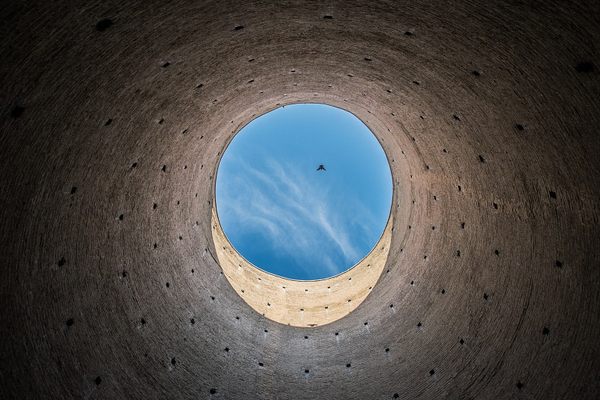
To gather this precious resource, homes were built for the pigeons. Often over six stories high and 45 to 75 feet in diameter, these towering structures were filled with a honeycomb of small roosts for the pigeons. Each tower held as many as 14,000 pigeons. The towers are also an amazing example of architectural theme and variation, each based on one of eight traditional forms, but unique in its particular architecture.
Once numbering in the thousands, many of the towers are now falling apart. Today, due to the use of artificial fertilizer, only a few hundred pigeon towers remain operational. The remaining towers are clustered largely in the Isfahan region of Iran.


Plan Your Trip
The Atlas Obscura Podcast is Back!




Follow us on Twitter to get the latest on the world's hidden wonders.
Like us on Facebook to get the latest on the world's hidden wonders.
Follow us on Twitter Like us on Facebook