Salt Men of Iran
Salt cured mummies continue to turn up in this Iranian mine.
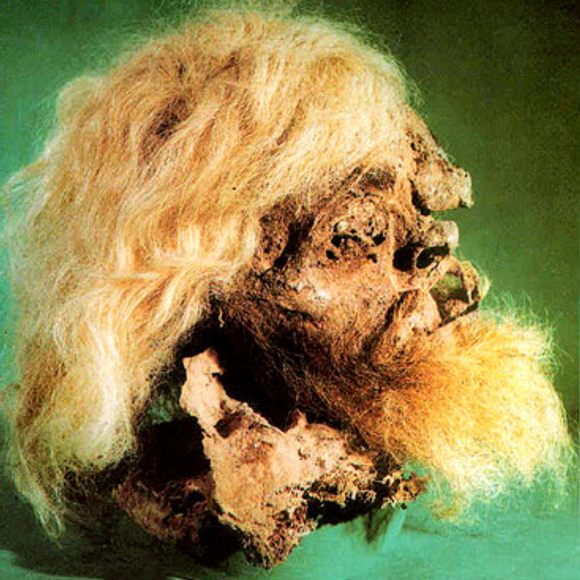
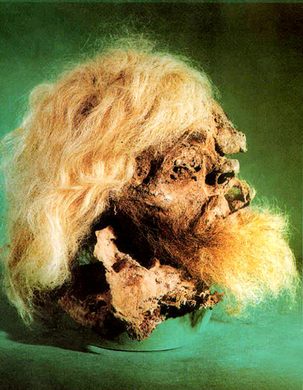
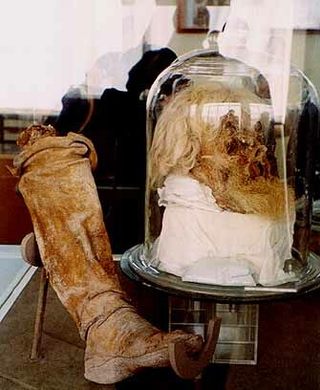
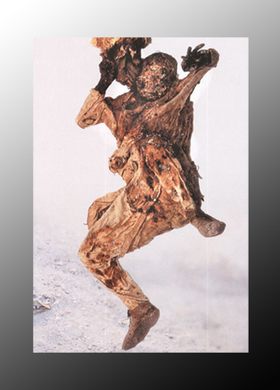
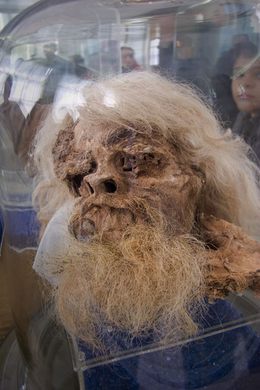

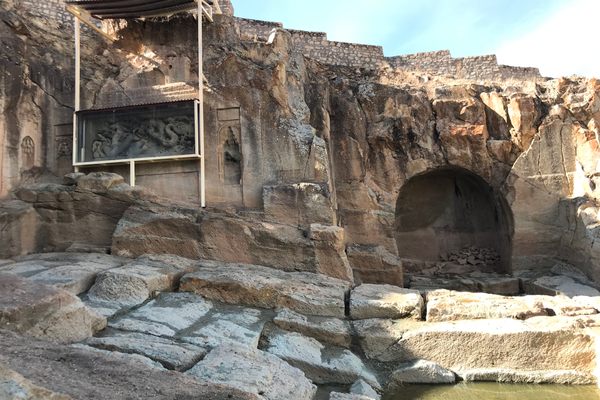
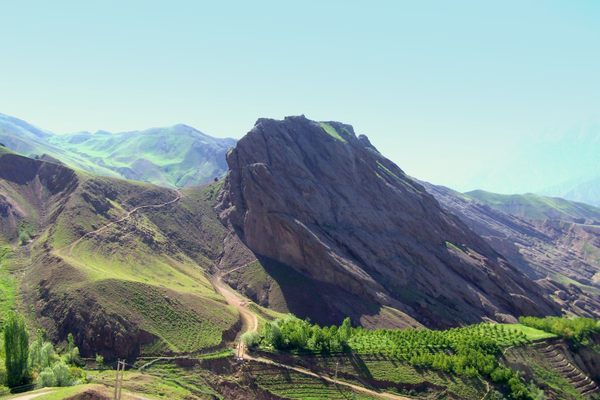
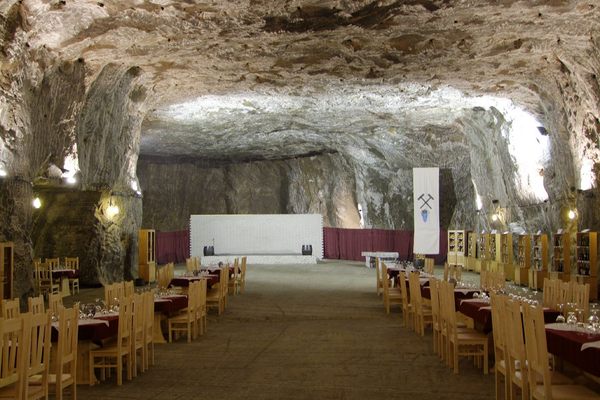
While bulldozing salt from the Chehrabad Salt Mine, Iranian miners recently uncovered the sixth “salt man” to be found in the last fifteen years. These “salt men” are in fact ancient corpses killed or crushed in the cave and mummified by the extreme conditions. Hair, flesh and bone are all preserved by the dry salinity of the cave, and even internal organs such as stomachs and colons have been found intact.
The first salt mummy, dated to 300 A.D., was discovered in 1993, sporting a long white beard, iron knives and a single gold earring. In 2004 another mummy was discovered only 50 feet away, followed by another in 2005 and a “teenage” boy mummy later that year. The oldest of the salt men found is truly ancient and has been carbon dated to 9550 B.C.
Stanford University’s folklorist Adrienne Mayor thinks there may be another layer to the already intriguing story of the salt men. She thinks the mummies may be the origin of the ancient myth of the satyr. “Obviously satyrs are mythic creatures,” Mayor said, but pointed out that the heads of the humans who had been preserved in the salt bear “a striking resemblance to ancient Greek and Roman depictions of satyrs.”
Classical images of satyrs are indeed similar looking, with similar hair and beards, snub noses and protruding jaws. “I think it’s very likely that an ancient discovery of a similarly preserved ‘salt man’ in northwestern Iran is the basis for St. Jerome’s account of the ‘satyr’ preserved in salt and examined by the Emperor Constantine and numerous other curious visitors in Antioch,” Mayor writes.
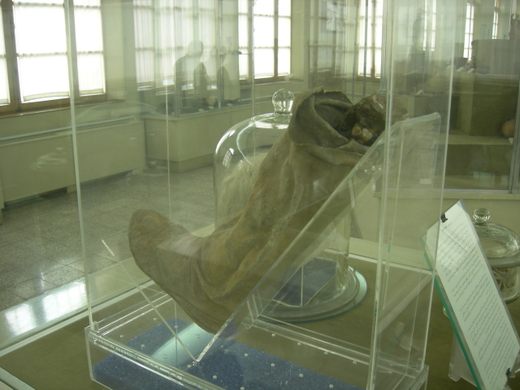
While four salt men have been transferred to the Zanjan Archaeology Museum and one to the National Museum of Iran in Tehran (all can be seen by the public), the final salt man remains in-situ, half stuck in a mountain of salt. As of 2008, Iran’s Ministry of Industries and Mines canceled the mining permit for the Chehrabad Salt Mine and declared the site an archeological research center so more work could be done to look for and preserve other salt men.
With the recent unrest in Iran, the fate of the salt men remains uncertain.
Community Contributors

Edited by


Plan Your Trip
The Atlas Obscura Podcast is Back!




Follow us on Twitter to get the latest on the world's hidden wonders.
Like us on Facebook to get the latest on the world's hidden wonders.
Follow us on Twitter Like us on Facebook