













About
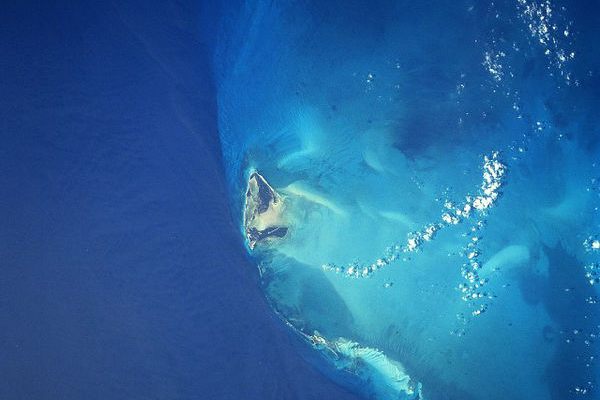
If any group of people qualifies for the term "lost tribe" it is the Sentinelese. Like other Andaman island natives, they have managed to live for thousands of years near one of the most ancient sea routes while avoiding any influence from outside civilizations.
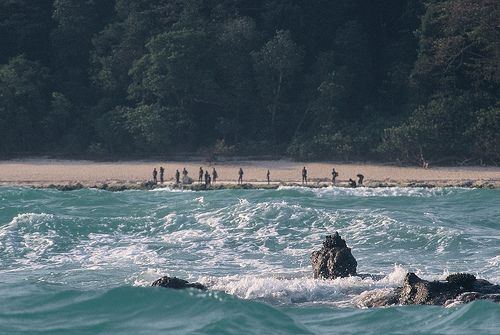
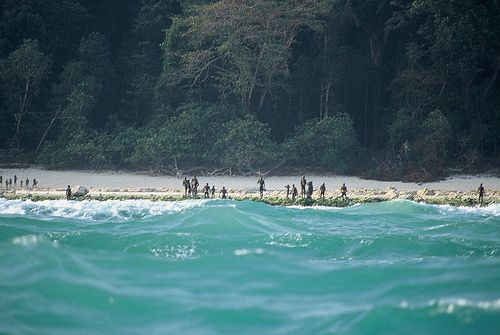
Situated in the bay of Bengal, the Andaman islands have been known to outsiders since ancient times. Andaman islanders respond with intense hostility at any attempt of outside contact, hurling arrows and stones at any unlucky visitor approaching their shores.
Early Arab and Persian documents report that Andaman islands were inhabited by cannibals -- an exaggeration probably originating from the ferocity of attacks with which these travelers were greeted. Later Indian and European explorers steered clear off these islands to avoid the hostile inhabitants.
Things began to change during British colonial rule in India and Burma. The first permanent European settlement, a penal colony, was established in late 1700s on Great Andaman. One by one, local tribes slowly broke their isolation, the latest being the Jarawa, who established the first peaceful contact with the Indian government only in 1997.
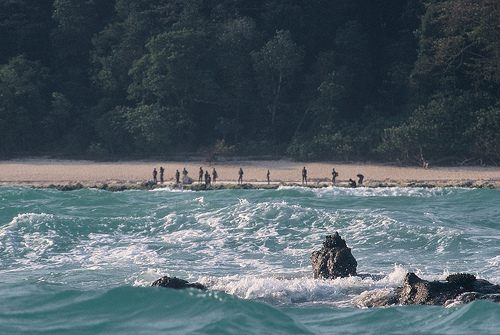
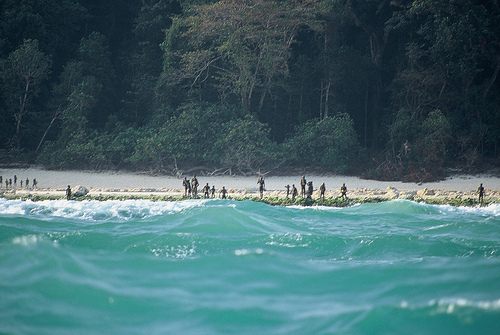
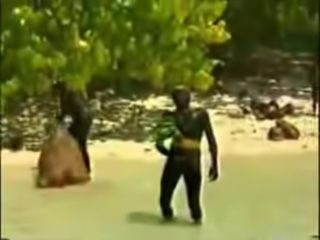
The Sentinelese, the inhabitants of small North Sentinel island, are the only remaining tribe in the Andaman chain to maintain their isolation. Since 1967 Indian authorities have attempted to make peaceful contact with the Sentinelese under the auspices of anthropological research. These "contact expeditions" consisted of a series of visits in which gifts such as coconuts were left on the shores, in an attempt to coax the Sentinelese out of their customary hostility to outsiders. Almost all of these attempts were greeted with showers of arrows and stone.
In 2006, Sentinelese archers killed two fishermen who were fishing illegally within range of the island, and drove off the helicopter that was sent to retrieve their bodies with a hail of arrows. The current policy of the Indian government is to leave the islanders alone. There are currently no planned attempts to contact the Sentinelese and access to North Sentinel island is strictly forbidden.
All knowledge about the Sentinelese is derived either by observation from a distance or from comparison with other Andamanise tribes. They are classified as Negritos, a loosely connected group of peoples inhabiting isolated regions in South East Asia, who exhibit physical characteristics more commonly found in Africans, such as very dark skin tone and peppercorn hair. The Sentinelese themselves appear however to be markedly taller on average than other Andamanese peoples.
Sentinelese wear no clothes, but wear leaves, fiber strings or similar material as decorations. Headbands made from vines appear to be fashionable items among men. There are no signs of agriculture on the island. Although most of their tools and weapons are made from stone and animal bones, the tribe seems to make use of metal fragments that end up washed on their shore.
The population of North Sentinel island is estimated at 250 individuals. After the Indian Ocean tsunami of 2004, there was a fear that the Sentinelese may have been wiped out, however they appear to have survived the event relatively unscathed.
Related Tags
Know Before You Go
Unauthorized access to North Sentinel island is strictly forbidden. Any contact not initiated by Sentinelese themselves is also not allowed.