About
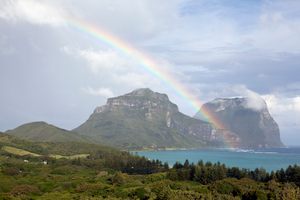
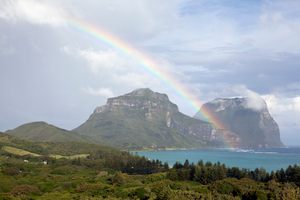
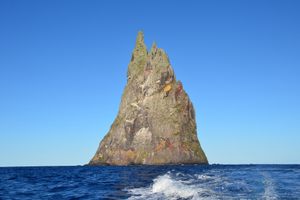
The remnants of a massive volcano, Ball's Pyramid juts 1,843 feet out of the Pacific Ocean. It's one of the surviving above-ground remnants of the once-lost (and recently found) sunken continent of Zealandia. Ball's Pyramid lies about 14 miles east of Lord Howe Island. It rises some 1,800 feet out of the water and measures about half a mile in length and 980 feet across, which makes it the tallest volcanic stack in the world. The formation is visible from Mount Gower Track on Lord Howe Island.
Discovered in 1788 by Royal Navy Lieutenant Henry Lidgbird Ball, hence the name, the rocky spire was thought to be largely devoid of animal life until 2001 when a group of scientists discovered there what may be the world's rarest insect.
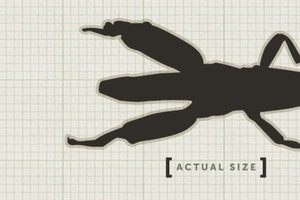
The Lord Howe Island stick insect (Dryococelus australis) had not been seen alive in over 70 years. Known as "land lobsters" or "walking sausages," the six-inch-long insects were once common on the neighboring Lord Howe Island, but were assumed to have been eaten to extinction by the black rats introduced to the island when a supply ship ran aground on its shores in 1918.
In 2001, the scientists found a colony of the huge Lord Howe Island stick insects living under a single bush, a hundred feet up. Somehow a few of the wingless insects escaped and managed, by means still unknown, to traverse 14 miles of open ocean, land on Ball's Pyramid, and survive there. Just 27 of the insects have been found on the spire. They are currently being bred in captivity.
Related Tags
Community Contributors
Added By
Published
June 20, 2016