

Bookmark and Share

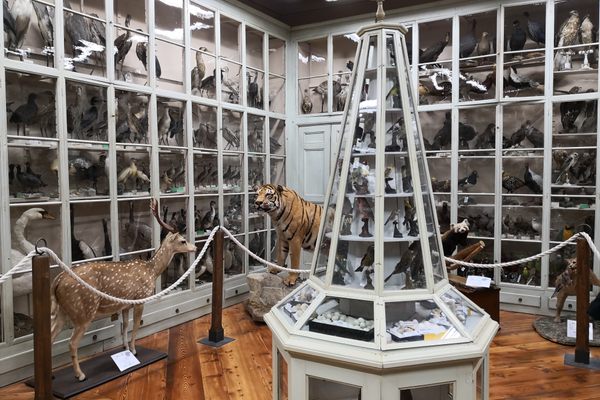
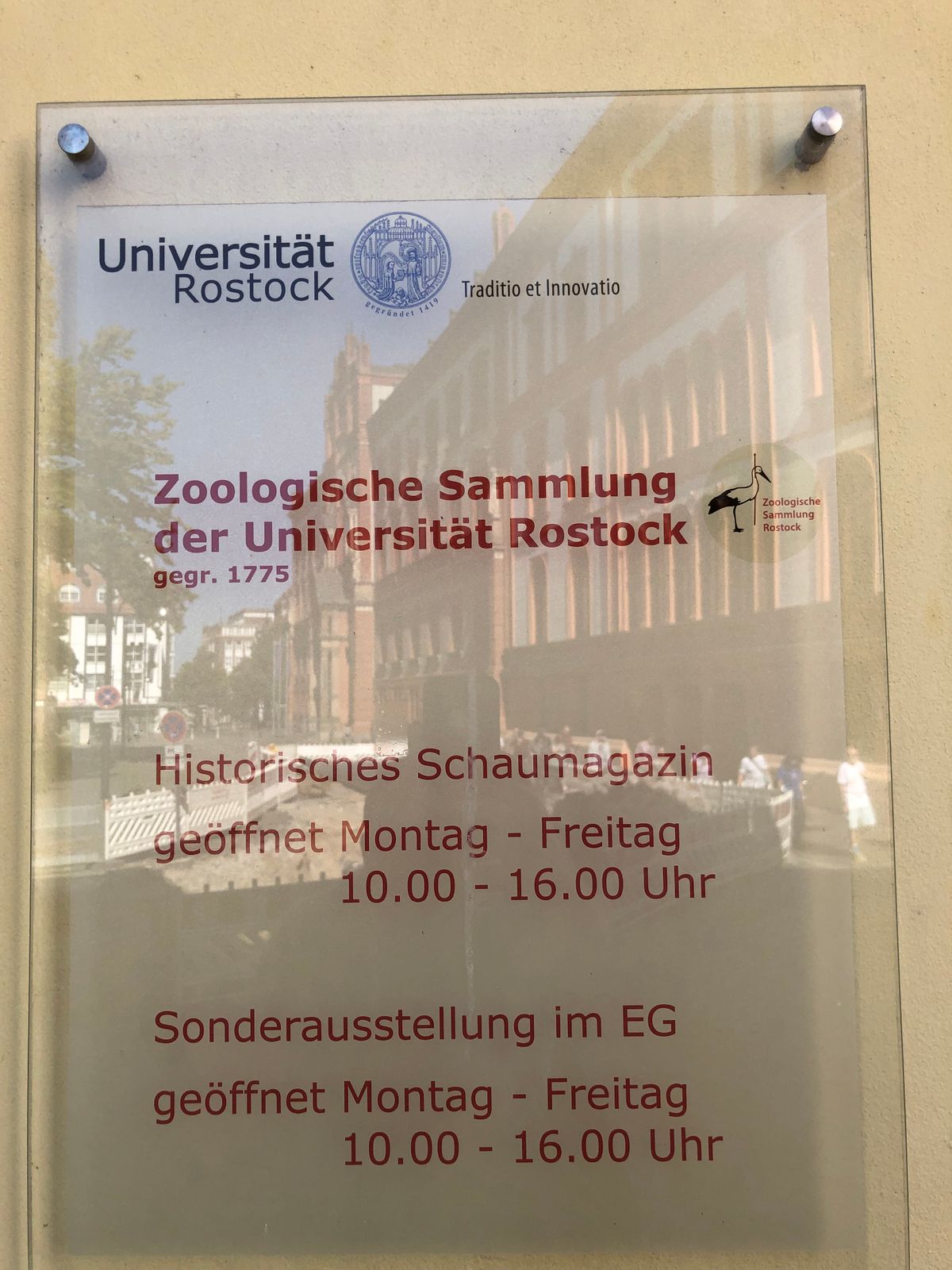
Zoological Collection of the University of Rostock

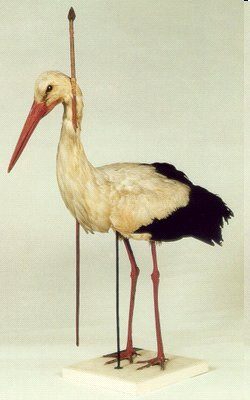
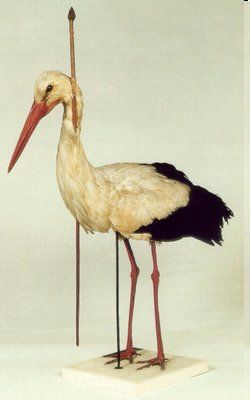
A taxidermied stork with an arrow through its neck proved that birds migrate
  • Proof that birds migrate over Africa. - Zoological Collection of the University of Rostock in Rostock, Germany

    Click to enlarge. Proof that birds migrate over Africa.  

  • Proof that birds migrate over Africa. - Zoological Collection of the University of Rostock in Rostock, Germany

    Click to enlarge. Proof that birds migrate over Africa. source

Tell your friends on Facebook:
I here

Until the 19th century, the sudden annual disappearance of white storks each fall had been a profound mystery to European bird-watchers. Aristotle thought the storks went into hibernation with the other disappearing avian species, perhaps at the bottom of the sea. According to some fanciful accounts, “flocks of swallows were allegedly seen congregating in marshes until their accumulated weight bent the reeds into the water, submerging the birds, which apparently then settled down for a long winter’s nap.” A 1703 pamphlet titled “An Essay toward the Probable Solution of this Question: Whence come the Stork and the Turtledove, the Crane, and the Swallow, when they Know and Observe the Appointed Time of their Coming,” argued that the disappearing birds flew to the moon for the winter.

On May 21, 1822, a stunning piece of evidence came to light, which suggested a less extra-terrestrial, if no less wondrous, solution to the quandary of the disappearing birds. A white stork, shot on the Bothmer Estate near Mecklenburg, was discovered with an 80 cm long Central African spear embedded in its neck. The stork had flown the entire migratory journey from its equatorial wintering grounds in this impaled state. The Arrow-Stork, or Pfeilstorch, can now be found, stuffed, in the Zoological Collection of the University of Rostock. It is not alone. Since 1822, some 25 separate cases of pfeilstorches have been recorded.

See an error? Know more? Log-in to edit this place.

Directions / Map

Javascript is required to view this map.

Comments

By Josh May 21 2009

I'd love to know where the other 25 pfeilstorches are stored. Do any other museums have a pfeilstorch on display?

By Anonymous June 19 2009

Josh, occurrences of Pfeilstorches have been recorded, not stored at a museum.

By Anonymous June 26 2009

I wish the article had documented in more detail the evolution of the hypothesis that birds migrated after this discovery. It would make an interesting story, particularly as it was so late, historically. If anyone had asked me prior to reading this when the phenomenon of bird migration had first been noted, I would have erroneously guessed during the period of Ancient Egypt or Ancient Greece.....

If anyone has a bibliography on thes, post it.

By Anonymous June 27 2009

Sometimes I feel like a Pfeilstorche.
James Christian
Karisia Walking Safaris
http://www.karisia.com

Post new comment

Sign in to comment, or comment anonymously.

Warning: Anonymous messages may be held in moderation, and may not be posted immediately. Please consider creating an account and logging in.

  • Web page addresses and e-mail addresses turn into links automatically.
  • Allowed HTML tags: <a> <em> <strong> <cite> <code> <ul> <ol> <li> <dl> <dt> <dd> <h2> <blockquote>
  • Lines and paragraphs break automatically.

More information about formatting options