Dismals Canyon
Famous for its bio-luminescent inhabitants, known as "Dismalites" .

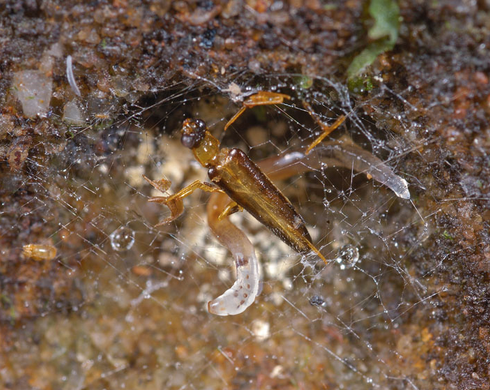
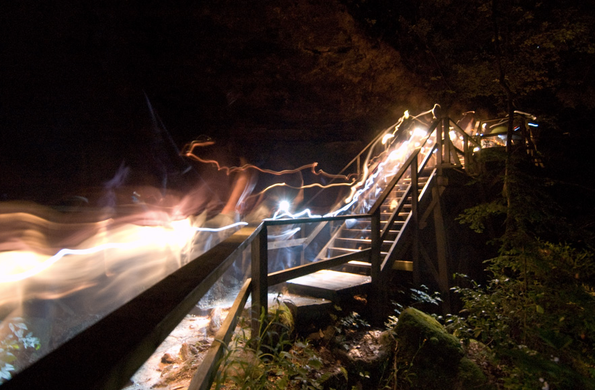
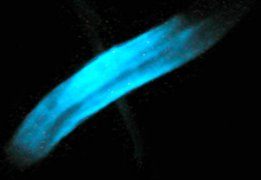
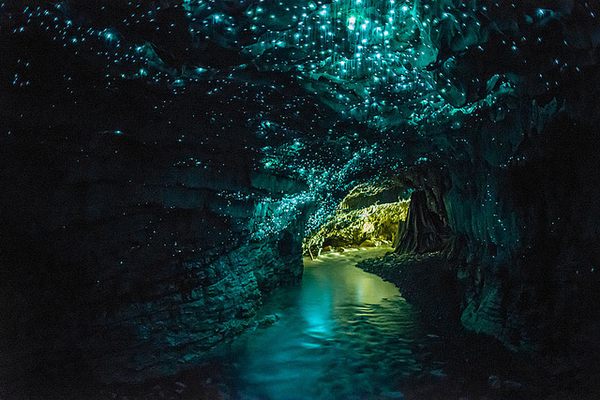

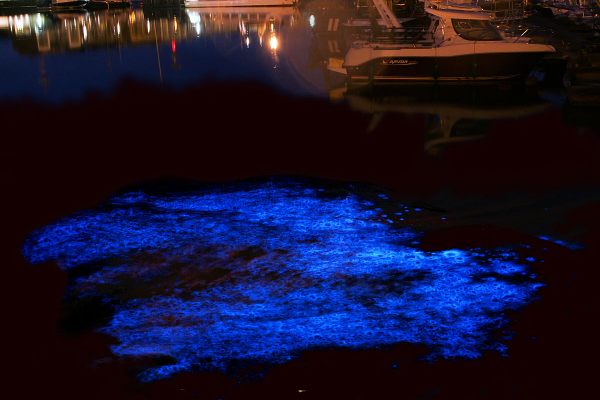
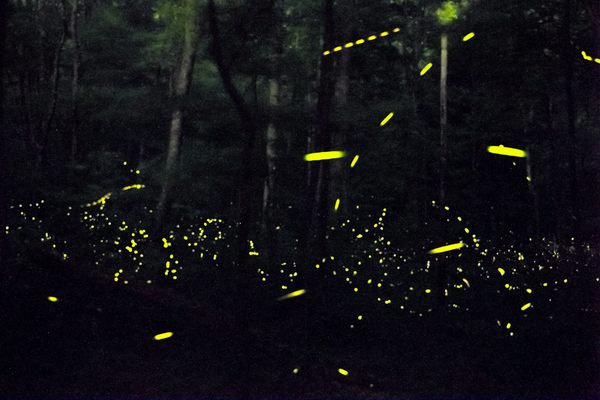
Past twilight this Alabama canyon comes alive, lighting up with hundreds of tiny bio-luminescent creatures known colloquially as “Dismalites.” These “glowworms” – actually a type of gnat larva – require a very specific habitat to survive and are unique to only a few places on Earth. They are related to the bioluminescent fungus gnats found in Australia and New Zealand.
Taxonomically known as “North American Orfelia fultoni,” the Dismalites are the larval stage of the only bioluminescent member of Diptera (the “fly” order, containing mosquitoes, gnats, midges, and houseflies) found in North America. An endemic species, they live only in the Appalachian Mountains and Cumberland Plateau, and emit a bright blue-green light to attract food, in the form of other flying insects.
In its larval stage the dismalites requires a very specific habitat to survive: humidity to prevent it from drying out; hanging surfaces to allow it to build sticky webs to trap the food; an adequate food supply of insects; a still atmosphere to prevent lines from tangling; and darkness to allow it to show a light. It so happens that Dismals Canyon provides the perfect habitat for these unique insects to survive, and when looking up at the moss-covered canyon walls it’s hard to tell where the Dismalites stop and the stars begin.
The dismalites aren’t the only curious part of Dismals Canyon. Until an ice storm destroyed one of them, twin Canadian Hemlocks (Tsuga canadensis) towered up from the canyon floor. One of them remains, towering 138 feet tall, 8 feet and 9 inches around and with a crown spread of over 50 feet, it looks quite sturdy and healthy for its age of 360 years. It is the largest of its species in Alabama and thought to be one of the largest anywhere in the world.
The hemlock is in an isolated spot hundreds of miles distant from their normal range of growth. It is believed the twins were the sole remnants of boreal or subarctic flora pushed south during the age of glaciers. The Canyon is also said to be home to the world’s largest Deumaria vine.
To see the dismalites buy a ticket for a night tour and bring a flashlight with a red filter on it.
Know Before You Go
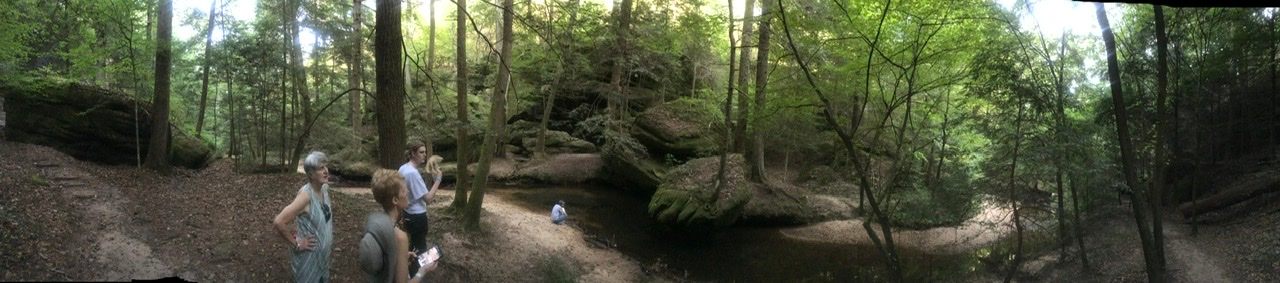
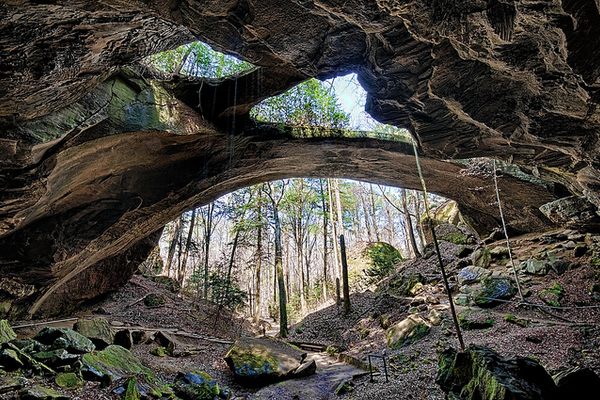
Dismals Canyon, is located in northwest Alabama, 10 miles west of the Sipsey Wilderness, 12 miles south of Russellville, Alabama off US-43/AL-17 between Russellville and Hamilton on Hwy. 8. The daylight self-guided tour uses a great map to guide you through the 1.5-mile trail on the canyon floor. It’s a fairly easy hike, though wheelchairs won’t be able to navigate the stairs down to the canyon floor or along the trail itself.
Community Contributors
Added by

Plan Your Trip
The Atlas Obscura Podcast is Back!




Follow us on Twitter to get the latest on the world's hidden wonders.
Like us on Facebook to get the latest on the world's hidden wonders.
Follow us on Twitter Like us on Facebook